
The following editorial was published in the The Kingston Whig Standard
By Wayne Cooney
As the owner of a small trucking company here in Kingston and an officer with the Ontario Trucking Association (OTA), I have spent my career believing a commercial vehicle is more than just a tool for commerce; it is a significant responsibility that shares the road with your family and mine. However, the results of a recent enforcement blitz here in Kingston indicate our current oversight system is not doing enough to deter the industry’s bad actors.
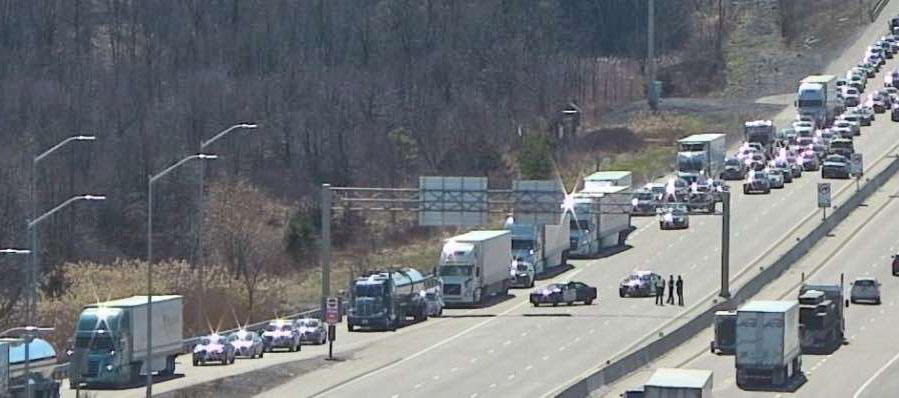
The enforcement effort saw officers from Kingston Police and the Ministry of Transportation team up to inspect 33 commercial vehicles. The results, according to the police news release, were deeply concerning: 20 charges laid, and 13 of those vehicles ( 40 per cent), were immediately placed out of service for being in a critically unsafe condition.
When close to half of the trucks inspected in a single day on local roads are found to have major defects, such as compromised braking systems or steering failures, it points to a systemic disregard for maintenance by a segment of the industry that growing too large for my comfort.
Seeing these results is frustrating. This is not how professional trucking companies operate. It’s not how I operate my company – nor will it ever be. It takes work to keep your operation professional and safe, and my team spends a lot of time and resources getting it right. Our operating record reflects this level of investment and dedication.
The OTA and I fully support the Ministry of Transportation and Kingston Police in these efforts, but blitzes are only one piece of the deterrence puzzle. For non-compliant operators, they are often little more than an inconvenience –something to wait out or, as seen in Kingston, simply drive around. Periodic enforcement is not enough. What’s needed is a permanent, layered approach: a strong, continuous enforcement presence on our highways, supported by additional resources in the communities where these trucks ultimately operate. Only then can we create a true 24/7 deterrent against operating outside the law.
Recently, the provincial government made a move that deserves our sincere applause. By transitioning the Gananoque Truck Inspection Station on Hwy 401 eastbound to a 24/7 operation, Minister of Transportation Prabmeet Sarkaria has recognized that safety doesn’t have a closing time. In doing so, he has effectively created a “safety fortress” for the gateway to eastern Ontario.
The 24/7 move at Gananoque complements the ramp up at the Vineland Inspection Station (Niagara Region), and the Windsor Truck Inspection Station. This consistent presence creates a culture of compliance because operators know their equipment will be scrutinized. We need that ubiquitousness in all parts of Eastern Ontario on the highway to secure the region, including the immediate need to open the Lancaster (Hwy 401) and Casselman (Hwy 417) Inspection Facilities on a 24/7 basis.
However, most of our regional scales do not operate 24/7, signaling to negligent fleet owners that safety is only a part-time requirement. That is unacceptable.
Implementing 24/7 operations at our key truck inspection stations will require an investment in personnel and infrastructure. To some, this may sound like a significant expense. However, within the context of Ontario’s $214.5 billion annual budget, the cost of staffing these facilities is incredibly modest – a minor line item, which would provide a massive return in the form of saved lives and a more secure supply chain.
To change the mindset of owners who cut corners on maintenance we must remove the element of “luck.” If a truck or driver are unsafe, there should be a certainty, they will be intercepted. We need a dramatic, structural shift toward 24/7 oversight at our major inspection stations to ensure our gateways are secure.
It is time to treat highway safety as a full-time commitment, not just in Gananoque, Windsor and Vineland, but across our highway network. We must turn our inspection stations into permanent barriers against negligence. When a random spot check shows a 40 per cent failure rate, it is proof the current approach is not enough. Our families, and our industry’s reputation, deserve a more rigorous standard.
Help raise awareness and demand an end to increasing lawlessness on our highways at stopillegaltrucking.ca/en/ota-home